What is Wachuma (San Pedro)?
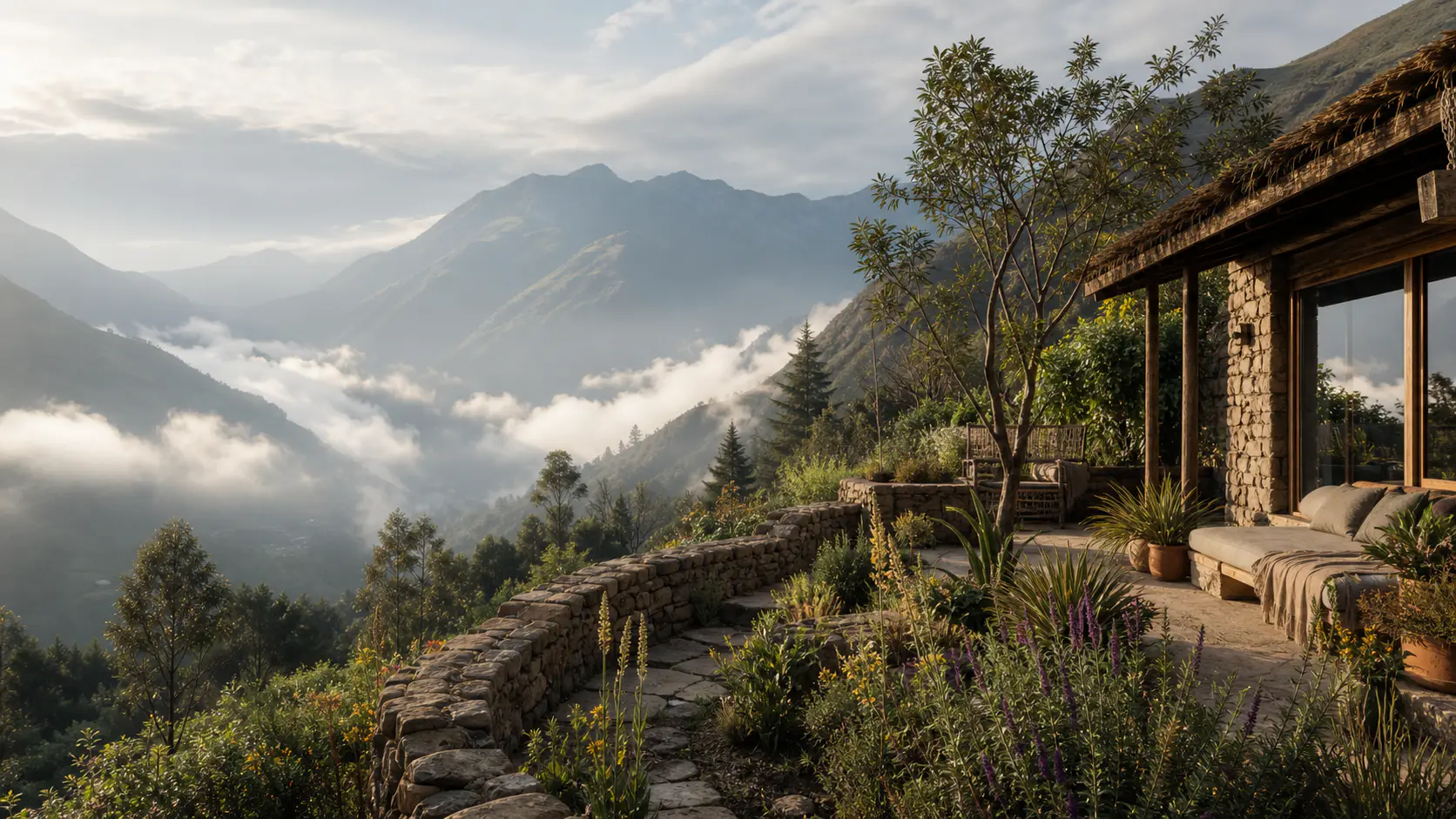
Wachuma — known in the West as San Pedro (Echinopsis pachanoi) — is a columnar cactus that has grown in the Peruvian Andes for thousands of years, used by pre-Inca cultures such as Chavín and Moche long before the arrival of the Spanish. Unlike ayahuasca, which is taken at night in an enclosed maloca, Wachuma is traditionally consumed at dawn, outdoors, in direct contact with the mountains, rivers, and open sky.
The medicine is prepared by slicing the outer skin of the cactus (where its active compounds are concentrated) and simmering it for several hours until it reduces into a thick, bitter green brew. Its effects are gentler and more gradual than ayahuasca's, often described as an expansion of the senses and a deep feeling of connection with nature rather than intense visions.
The medicine is prepared by slicing the outer skin of the cactus (where its active compounds are concentrated) and simmering it for several hours until it reduces into a thick, bitter green brew. Its effects are gentler and more gradual than ayahuasca's, often described as an expansion of the senses and a deep feeling of connection with nature rather than intense visions.
Where the ceremony takes place: the Sacred Valley
Most Wachuma retreats in Cusco take place in the Sacred Valley, among Inca terraces, snow-capped peaks, and rivers — a landscape the medicine is said to amplify. Ceremonies usually begin very early, before sunrise, so participants can watch the sun rise over the mountains while the medicine takes effect.
Because the ceremony unfolds outdoors over several hours, the facilitator chooses locations with easy access to shade, water, and open space to walk, sit, or lie down as each person's process requires.
Because the ceremony unfolds outdoors over several hours, the facilitator chooses locations with easy access to shade, water, and open space to walk, sit, or lie down as each person's process requires.
What to expect: the ceremony timeline
A typical Wachuma ceremony follows a loose but recognizable arc:
- Opening circle at dawn, where the facilitator explains the process and each participant sets an intention.
- The brew is served in one or two rounds, roughly 45 minutes apart.
- Effects begin within 45–90 minutes: heightened senses, emotional openness, and a gradual, wave-like intensity that peaks around hour 2–3.
- A long integration window follows — walking meditations, music, or simply resting in nature — lasting 6 to 8 hours in total.
- The ceremony closes with a shared meal and a closing circle to put words to the experience.
Benefits of a Wachuma retreat
Participants and facilitators commonly report:
- Emotional clarity: a gentler, more gradual opening than ayahuasca, useful for processing grief, anxiety, or major life decisions.
- Reconnection with nature: being outdoors during the whole process reinforces a felt sense of belonging to the landscape.
- Physical release: many describe tension held in the body loosening through movement, tears, or laughter.
Who should avoid it: contraindications
Wachuma is not appropriate for everyone. It should be avoided by people with uncontrolled heart conditions, a personal or family history of psychosis or bipolar disorder, and by anyone taking SSRIs, MAOIs, or other psychiatric medication without prior medical clearance. Pregnant people should not participate. As with any plant medicine retreat, a prior health screening with our team is mandatory before joining.
Gallery
“
Wachuma does not pull you inward like ayahuasca — it opens your eyes to what was already around you.
— Ayahuasca Retreat Cusco Team
Available Tours
Discussions
No comments yet.
Leave your opinion
Have an account? to comment with your profile